Enlarged male breast tissue is far more common than most men realise, yet very few talk about it. It can affect confidence at the gym, at the beach, or even in a simple fitted shirt. The good news is that gynecomastia is well understood and treatable, so you do not have to simply live with it.
If the condition has stayed for more than a year or two, expert care is the most reliable way forward. Choosing the Best Gynecomastia Surgeon In Baner means getting an honest diagnosis, a plan built around your body, and a surgeon who explains every step before you commit.
Quick Facts Every Man Should Know
Very Common
A large share of men experience some degree of breast enlargement during their lifetime.
Not Always Fat
True gynecomastia involves glandular tissue, so weight loss alone may not fix it.
Highly Treatable
Modern surgical techniques use small incisions and aim for a natural, flat chest contour.
Aftercare Matters
The right garments and wound care support smoother healing and better results.
What Causes Gynecomastia?
The root cause is a shift in the balance between estrogen and testosterone. That shift can be triggered by several things:
- Puberty: temporary hormonal swings in teenage boys.
- Ageing: testosterone naturally declines in older men.
- Medications: some drugs for ulcers, heart conditions, prostate issues and anxiety.
- Substances: heavy alcohol use, anabolic steroids and certain recreational drugs.
- Health conditions: thyroid, liver or kidney problems and hormonal disorders.
A painful, hard, one-sided lump or any nipple discharge should be checked by a doctor promptly. Do not assume it is gynecomastia.
Treatment Options Explained
The right option depends on how long the condition has been present, how much of it is glandular versus fatty, and your overall health.
Observation & Lifestyle
Suitable for recent or mild cases, especially in teens, along with reviewing medications and habits.
Liposuction
Removes excess fat when the enlargement is mainly fatty, through very small incisions.
Gland Excision
Removes firm glandular tissue, often combined with liposuction for a smooth, balanced chest.
Signs and Symptoms: When Should You See a Doctor?
Gynecomastia usually develops gradually. Common signs include swollen breast glands, a firm rubbery lump under the nipple, tenderness or sensitivity, and a puffy or enlarged nipple area. It may appear on one side first and later affect both.
Book a medical check if the swelling is painful, hard and fixed to one spot, grows quickly, or comes with skin changes or nipple discharge. A proper examination, and sometimes blood tests or imaging, helps rule out other conditions and guides the right plan.
How Gynecomastia Surgery Is Done: Step by Step
1. Consultation
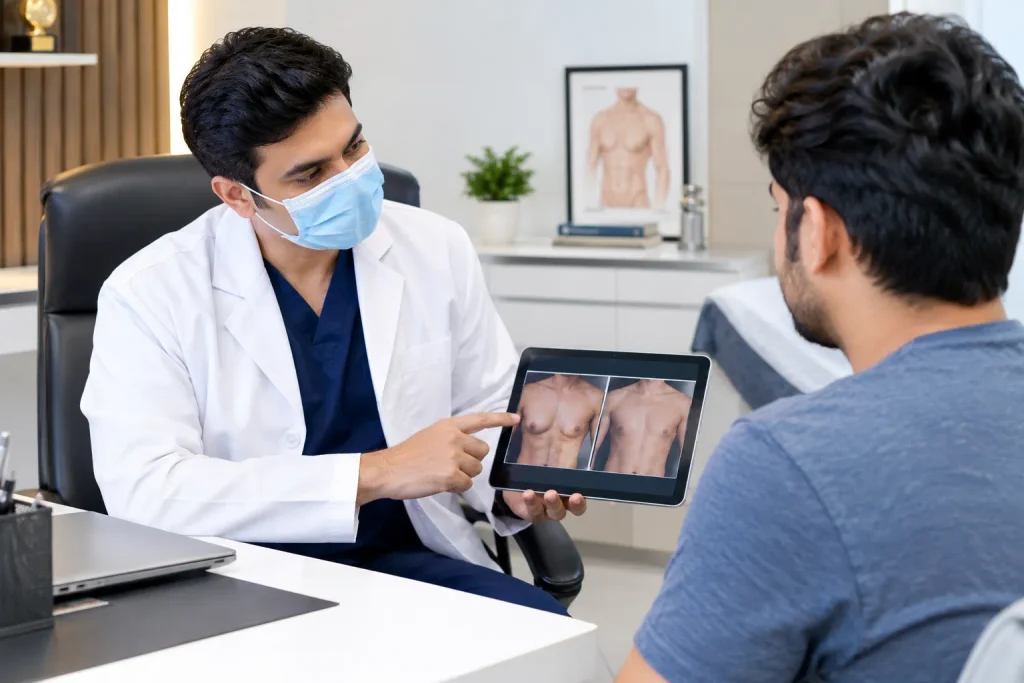
Medical history, chest examination and a discussion of goals and expectations.
2. Anaesthesia
Local with sedation or general anaesthesia, chosen for your comfort and safety.
3. The Procedure
Fat is removed by liposuction and glandular tissue is excised through small, discreet incisions.
4. Dressing & Support
Incisions are closed and a compression garment is fitted before you go home.
The surgery usually takes one to two hours depending on severity, and most patients go home the same day.
Recovery Essentials: Product Types by Perennial Brite Global LLC
Good recovery is not only about the procedure. The right supportive products make the healing weeks more comfortable and help protect your results.
Compression Garments
Chest vests and binders that support tissue and help control swelling.
Wound Care Dressings
Sterile, breathable dressings to keep incision sites clean and protected.
Scar Care Products
Silicone sheets and gels used once the wound has healed, as advised by your surgeon.
Recovery Support Items
Comfort accessories that make daily movement and rest easier after surgery.
Recovery Timeline: What to Expect
- First 48 hours: rest, expect swelling and tightness, and keep your compression garment on.
- Week 1: gentle walking is encouraged, and many return to light desk work.
- Weeks 2 to 4: bruising fades, and you attend follow-up visits for wound checks.
- Weeks 4 to 6: light exercise may restart with your surgeon’s approval.
- 3 to 6 months: swelling settles and the final contour becomes clear.
Myths vs Facts
Myth: Chest exercises will fix it.
Fact: Exercise builds muscle but cannot remove glandular tissue.
Myth: It only affects overweight men.
Fact: Lean and fit men can develop it because of hormones or medication.
Myth: Surgery leaves large scars.
Fact: Incisions are small and usually placed to blend with the nipple edge or natural folds.
As with any surgery, risks such as bleeding, infection, asymmetry or changes in sensation exist. Choosing an experienced surgeon and following aftercare instructions lowers these risks.
How to Choose the Right Gynecomastia Treatment In Baner
Take your time with this decision. Start with a clinical examination, then look at these points before booking:
- Qualifications: a board-certified plastic or cosmetic surgeon with relevant experience.
- Before-and-after results: real cases similar to your chest type.
- Clear diagnosis: an explanation of whether your case is glandular, fatty or both.
- Hospital standards: a certified facility with proper anaesthesia and safety protocols.
- Transparent costs and follow-up: no hidden charges, and a defined aftercare plan.
Looking for Gynecomastia Surgery In Baner? Find the location on the map below.
Final Takeaway
Gynecomastia is common, medical in nature and nothing to be embarrassed about. Understanding the cause, choosing a qualified surgeon and following proper aftercare, including the right supportive products, gives you the best chance of a flatter, more confident chest.
Ready to take the next step? Explore Gynecomastia Treatment In Baner and book a consultation today.
Frequently Asked Questions
What is gynecomastia?
Gynecomastia is a benign enlargement of male breast tissue caused by an imbalance between estrogen and testosterone. It can affect one or both sides and may cause tenderness or a puffy appearance around the nipple.
Will gynecomastia go away on its own?
Pubertal gynecomastia often settles within months to a couple of years. If it persists beyond that, or begins in adulthood, medical evaluation is advised, and you can explore Gynecomastia Treatment In Baner with a qualified specialist.
Who is a good candidate for gynecomastia surgery?
Good candidates are healthy, non-smoking adults whose breast enlargement has been stable for at least a year and has not responded to lifestyle changes. A consultation for Gynecomastia Surgery In Baner will confirm whether your chest is suitable.
How long is recovery after gynecomastia surgery?
Many people return to desk work within about a week, while strenuous exercise and heavy lifting are usually avoided for several weeks. Your surgeon will give a personalised timeline.
Is gynecomastia surgery painful?
It is performed under anaesthesia, so you should not feel pain during the procedure. Mild to moderate soreness, tightness and swelling afterwards are common and are managed with prescribed medication.
How do I choose the right surgeon?
Look for relevant qualifications, a large number of similar cases, honest communication and a clear aftercare plan. Reading patient reviews can help you shortlist the Best Gynecomastia Surgeon In Baner.
Why is a compression garment needed after surgery?
A compression garment supports healing tissue, helps reduce swelling and fluid build-up, and assists the chest in settling into its new contour. It is usually worn for several weeks as advised.
Ready to Feel Confident in Your Own Skin?
Get a private, judgement-free consultation, a clear diagnosis and a treatment plan made for you.
Book Your Consultation Today