
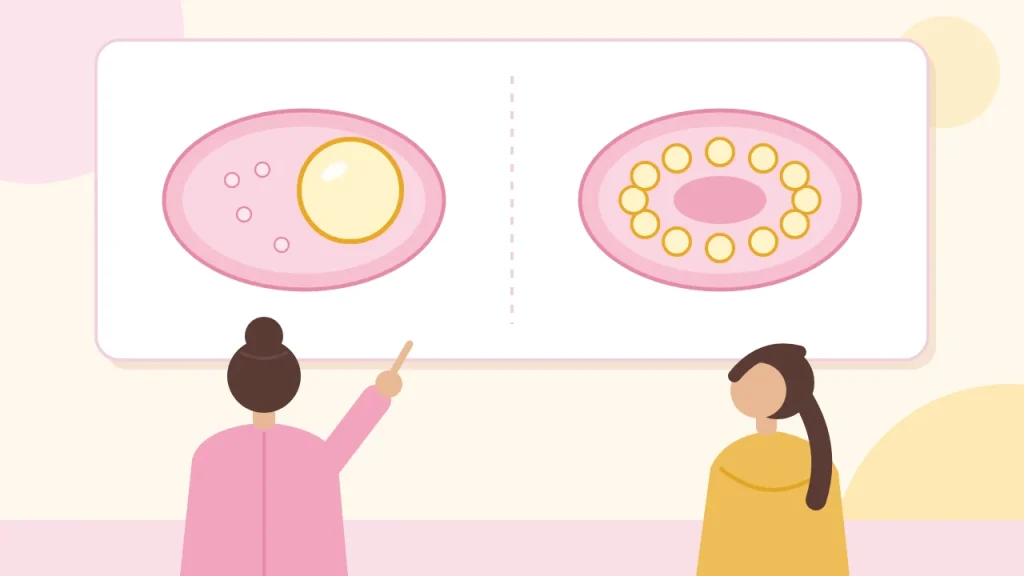
Pelvic pain, irregular periods and an ultrasound report that mentions “cysts” can leave any woman worried. The words sound alike, so many people confuse the two conditions. In reality, ovarian cysts vs PCOS is a comparison of two very different problems, with different causes, symptoms and treatment.
If you are unsure which one you have, speak to a Gynecologist in Ravet for an ultrasound and the right tests instead of guessing. This guide explains each condition, how to tell them apart and what treatment usually involves.
Ovarian Cysts vs PCOS at a Glance
- An ovarian cyst is a fluid-filled sac on or inside an ovary.
- PCOS is a hormonal condition that affects ovulation, skin, weight and periods.
- The “cysts” in PCOS are actually small, immature follicles.
- Most ovarian cysts are harmless and often go away on their own.
- A woman can have PCOS, an ovarian cyst or both together.
What Are Ovarian Cysts?
An ovarian cyst is a sac filled with fluid that forms on the surface of an ovary or inside it. Cysts are very common during the reproductive years, and many cause no symptoms at all. They are often found by chance during a routine ultrasound.
There are several types, and each behaves differently:
Functional Cysts
Form as part of the normal menstrual cycle. They are the most common type and usually shrink within a few cycles.
Dermoid Cysts
Contain tissue such as hair or fat. They are usually benign but may need surgery if they grow.
Endometriomas
Also called chocolate cysts. They are linked with endometriosis and can cause pain and fertility problems.
Cystadenomas
Develop from ovarian surface cells and can grow large. Doctors monitor them closely.
What Is PCOS?
Polycystic ovary syndrome (PCOS) is a hormonal and metabolic condition. Higher levels of male hormones (androgens) and insulin resistance interfere with regular ovulation. As a result, many small follicles stay in the ovary without maturing, which gives the ovaries a “polycystic” look on ultrasound.
Importantly, these follicles are not true cysts. PCOS is a long-term syndrome that can affect periods, skin, hair, weight, mood and fertility, whereas a simple ovarian cyst is a single, often temporary finding.
Ovarian Cysts vs PCOS: Key Differences
This table gives a quick comparison. Your own situation may differ, so use it only as a starting point for discussion with your doctor.
| Feature | Ovarian Cyst | PCOS |
|---|---|---|
| What it is | A fluid-filled sac on or in the ovary | A hormonal and metabolic syndrome |
| Main cause | Ovulation changes, endometriosis or abnormal cell growth | Excess androgens and insulin resistance |
| Duration | Often temporary | Long-term, needs ongoing care |
| Typical symptoms | Often none; pelvic pain, bloating, pressure | Irregular periods, acne, hair growth, weight gain |
| Ultrasound finding | One or more distinct sacs | Many small follicles in one or both ovaries |
| Effect on fertility | Usually none, except some types such as endometriomas | Can reduce regular ovulation |
| Treatment | Watchful waiting, pain relief or surgery | Lifestyle changes, medicines and follow-up |
Symptoms of Each Condition
Ovarian Cyst Symptoms
- Dull or sharp pain in the lower abdomen
- Bloating or a feeling of fullness
- Pain during intercourse
- Frequent urination or pelvic pressure
- Changes in the menstrual cycle
PCOS Symptoms
- Irregular, infrequent or missed periods
- Acne and oily skin
- Excess facial or body hair, thinning scalp hair
- Weight gain and dark skin patches
- Difficulty conceiving and mood changes
Seek Urgent Medical Help If You Have
- Sudden, severe pain in the lower abdomen
- Pain with fever, vomiting or fainting
- Dizziness, rapid breathing or cold, clammy skin
- Very heavy bleeding or a rapidly swelling abdomen
How Are Ovarian Cysts and PCOS Diagnosed?
A careful evaluation helps tell the two apart. Your doctor will usually begin with your history and examination, then suggest tests such as:
- Pelvic ultrasound: the main test, which shows the size, number and type of cysts or follicles.
- Hormone tests: to check androgens, LH, FSH, thyroid and prolactin levels.
- Blood sugar and cholesterol: especially when PCOS is suspected.
- Pregnancy test: to rule out pregnancy-related causes of pain.
- Tumour markers or MRI: only when a cyst looks complex or suspicious.
PCOS is usually diagnosed when at least two of three features are present: irregular ovulation, signs of high androgens, and polycystic-appearing ovaries on ultrasound.
Treatment Options
Treatment depends on the diagnosis, your age, your symptoms and your plans for pregnancy.
For Ovarian Cysts
- Watchful waiting with a repeat ultrasound after a few weeks
- Pain relief medicines as advised
- Hormonal pills in some women to prevent new functional cysts
- Surgery, often laparoscopic, for large, persistent, twisted or suspicious cysts
For PCOS
- Balanced diet, exercise and weight management
- Hormonal medicines to regulate cycles
- Insulin-sensitising medicines in selected women
- Ovulation-inducing treatment when planning pregnancy
Never start or stop hormonal medicines on your own. Each option has benefits and side effects, so your doctor will choose what suits you.
6 Smart Steps for Healthier Ovaries
- Track your periods: note dates, flow and pain every month.
- Do not ignore pelvic pain: repeated pain deserves a scan.
- Eat balanced meals: whole grains, pulses, vegetables and fruit.
- Stay active: aim for about 30 minutes on most days.
- Manage stress and sleep: both influence hormones.
- Attend follow-ups: repeat scans show whether a cyst is changing.
Fertility and Pregnancy
Most simple ovarian cysts do not affect fertility. However, endometriomas and large cysts may reduce ovarian function in some women. PCOS, on the other hand, can cause irregular ovulation, so conception may take longer without treatment.
The encouraging news is that most women with either condition can become pregnant, often with simple medical help. Women with PCOS should register their pregnancy early, because they have a higher chance of gestational diabetes and high blood pressure. A pre-pregnancy consultation is a sensible first step for both conditions.
Women’s Health Services at Glory Women’s Clinic
Evaluation and management of irregular cycles and hormonal concerns.
Care for pelvic pain, ovarian cysts, discharge and infections.
Pregnancy monitoring, scans and advice through each trimester.
Initial assessment and counselling for couples planning a baby.
Counselling on contraception and spacing of pregnancies.
Routine women’s health screening and follow-up advice.
How to Choose the Right Gynecologist in Ravet
Cysts and PCOS both need accurate diagnosis and follow-up, so trust and communication matter. Keep these points in mind:
- Check the doctor’s degree and valid medical council registration.
- Look for a clinic with ultrasound and basic diagnostic support nearby.
- Choose someone who listens, explains options clearly and respects your privacy.
- Prefer a doctor who explains why surgery is or is not needed.
- Feel free to seek a second opinion before any operation.
Looking for a Gynecologist in Ravet? Find the clinic location on the map below.
Ovarian Cysts vs PCOS FAQs
Is PCOS the same as having ovarian cysts?
No, they are different conditions, although the names sound similar. PCOS is a hormonal condition in which the ovaries show many small immature follicles, which are not true cysts. An ovarian cyst is a single fluid-filled sac that can form for several reasons. Glory Women’s Clinic explains the difference through an ultrasound and hormone tests. A woman can have PCOS, an ovarian cyst or both.
Do ovarian cysts go away on their own?
Many functional cysts disappear within one to three menstrual cycles without treatment. Your doctor may repeat the ultrasound after a few weeks to confirm this. Cysts that grow larger, persist or cause pain may need further treatment. Glory Women’s Clinic advises women not to ignore pain just because cysts are common. Regular follow-up keeps you safe.
Can PCOS cause ovarian cysts?
PCOS itself does not form true cysts, but many small follicles are seen on the ovaries. These follicles are eggs that did not mature and release. Women with PCOS can still develop other ovarian cysts like anyone else. Glory Women’s Clinic recommends scans and hormone tests to separate the two conditions. Treatment depends on which one is found.
What are the warning signs of a ruptured or twisted cyst?
Sudden, severe pain in the lower abdomen is the main warning sign. It may come with vomiting, fever, dizziness or fainting. These symptoms need urgent medical care, because a rupture or twisting of the ovary can be serious. Glory Women’s Clinic urges women not to wait or self-medicate in such situations. Go to the nearest hospital emergency department.
Can I get pregnant with an ovarian cyst or PCOS?
Many women with either condition conceive. Simple functional cysts usually do not affect fertility. PCOS may make ovulation irregular, but treatment and cycle tracking can help. Endometriomas, also called chocolate cysts, can reduce fertility in some women. Glory Women’s Clinic recommends a pre-pregnancy consultation for personalised advice.
When is surgery needed for an ovarian cyst?
Surgery is considered when a cyst is large, keeps growing or does not go away after follow-up. It is also advised if the cyst causes severe pain, twists or looks suspicious on scans. Most operations are done by laparoscopy through small cuts. Glory Women’s Clinic explains the benefits and risks before any decision. Many women need no surgery at all.
Can lifestyle changes help with cysts and PCOS?
Lifestyle changes help PCOS far more than they help most ovarian cysts. Balanced low-glycemic meals, regular exercise, good sleep and a healthy weight improve hormone balance and cycles. These habits support overall health in women with cysts as well. Glory Women’s Clinic suggests starting with small, sustainable changes. They work best alongside medical follow-up.
How are ovarian cysts and PCOS diagnosed?
Doctors begin with your history and a pelvic examination. A pelvic ultrasound is the main test for both conditions. Blood tests check hormones, blood sugar and, when needed, tumour markers. Glory Women’s Clinic combines these results with your symptoms to reach a clear diagnosis. Treatment is then planned for you.
Final Takeaway
Ovarian cysts and PCOS may share a name, but they are not the same. A cyst is usually a temporary, localised finding, while PCOS is a long-term hormonal condition. Persistent pain, irregular periods or trouble conceiving are reasons to get checked rather than wait. With the right diagnosis, both conditions can be managed effectively.
For personal guidance, consider a consultation with the Best Gynecologist In Ravet to review your symptoms. If you are planning a baby, speak to the Best Gynecologist In Ravet for Pregnancy early and keep every follow-up visit.
Disclaimer: This article is for general information and awareness only. It is not a substitute for professional medical advice, diagnosis or treatment. Please consult a registered medical practitioner for your individual health needs.