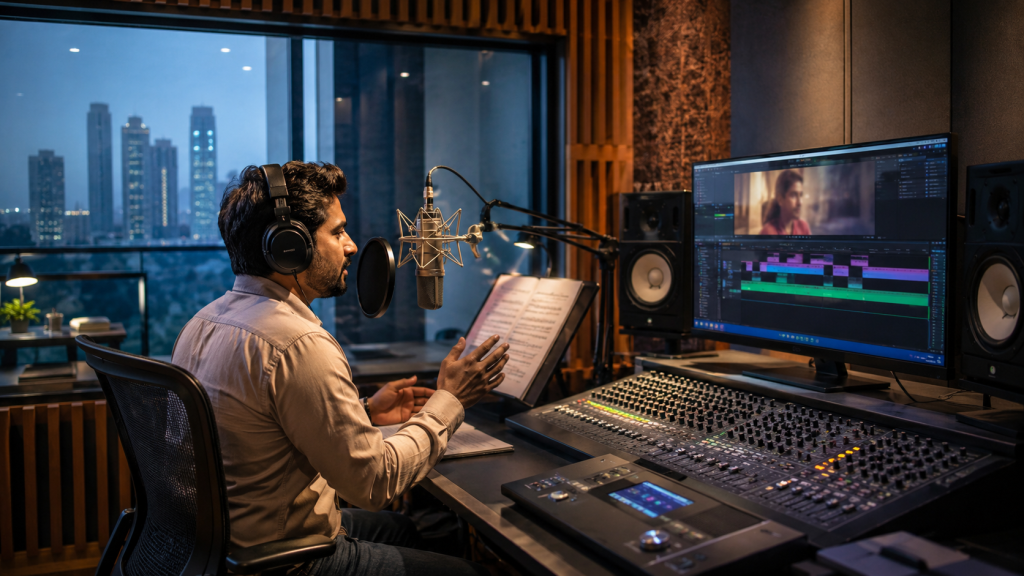
A good YouTube video can have excellent production, useful information, and a strong story—and still struggle to reach a larger audience simply because people prefer to watch content in a language they understand naturally.That is where YouTube Video Dubbing in Mumbai can make a real difference.
Professional dubbing allows a creator or brand to take an existing video and produce a natural-sounding version in another language without having to recreate the entire production. Instead of asking viewers to read subtitles throughout the video, dubbing lets them listen to the message in a familiar language while continuing to watch the original visual content.
This comprehensive guide explains how YouTube Video Dubbing in Mumbai works, when businesses should use it, how professional dubbing compares with AI or basic voice-over, what the workflow looks like, how to choose a dubbing partner, and how TransVernac can support multilingual content localization.
What Is YouTube Video Dubbing?
YouTube video dubbing is the process of replacing or adding the original spoken audio of a YouTube video with professionally translated and recorded dialogue in another language while preserving the video’s visual content.
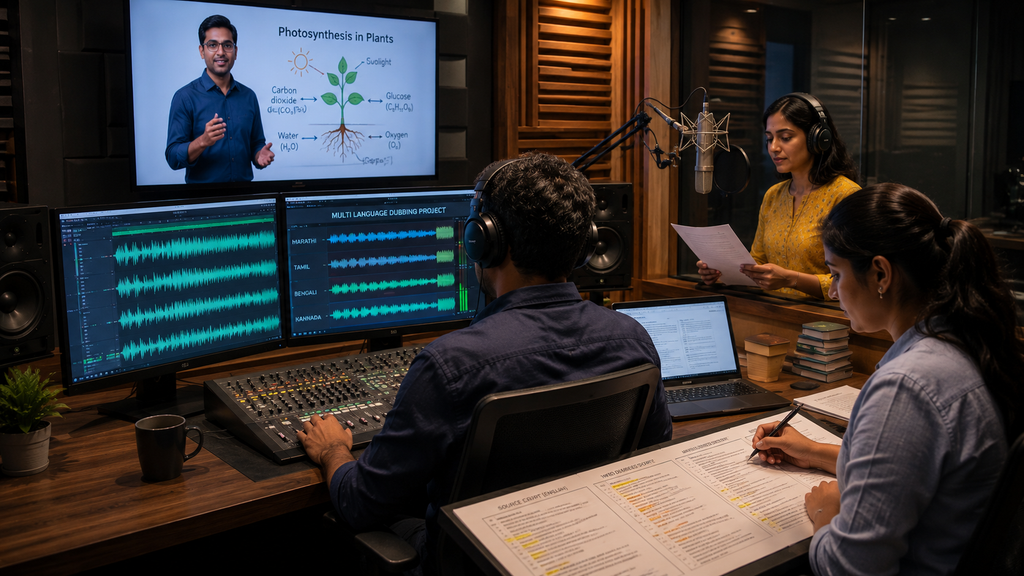
A professional dubbing workflow normally involves:
- Reviewing the original video.
- Transcribing the spoken content.
- Translating and culturally adapting the script.
- Casting suitable voice artists.
- Recording the translated dialogue.
- Synchronizing the voice with the video.
- Editing and mixing the audio.
- Reviewing linguistic and technical quality.
- Delivering the final dubbed audio or video.
YouTube itself supports multilingual audio tracks for eligible creators. Its official documentation explains that creators can upload additional audio tracks to a single video, allowing viewers to switch between languages. YouTube also says that translated titles and descriptions can help videos appear when viewers search using those translated versions.
That makes professional dubbing increasingly relevant for creators who want to expand beyond their original language.
Why Is YouTube Video Dubbing Important for Mumbai Creators and Businesses?
Mumbai is one of India’s largest media, entertainment, advertising, business and creator hubs. Content produced here can reach audiences far beyond Maharashtra.
A Marathi business may want to reach Hindi-speaking consumers. An English-speaking educator may want to reach students across India. A Mumbai-based YouTube creator may want to build audiences in international markets.
Dubbing helps reduce the language barrier.
1. Reach New Language Audiences
The most obvious advantage is audience expansion.
Suppose a creator has a successful English-language educational channel. Instead of producing completely separate videos for every market, the creator can localize selected videos into languages where audience demand exists.
This can make existing content more useful to new viewers.
2. Make Content Easier to Consume
Subtitles require viewers to continuously read while watching.
Dubbing offers a different experience: viewers can listen in their preferred language while focusing on demonstrations, graphics, interviews and on-screen information.
For tutorials, educational videos, product explainers and documentary-style content, that can be especially valuable.
3. Extend the Value of Existing Videos
A successful video does not necessarily have to remain limited to its original language.
A creator can identify high-performing videos and consider producing localized versions or additional audio tracks for suitable target languages.
YouTube recommends focusing on one or two languages first and expanding based on demand and analytics rather than attempting to localize everything at once.
4. Strengthen Local Connection
A technically accurate translation may still sound foreign.
Professional localization considers expressions, tone, cultural references and how people naturally speak.
For example, a Mumbai-focused marketing video translated for a Marathi audience should not sound like a machine converting an English sentence word-for-word. It should sound like something a real Marathi speaker would naturally say.
That distinction matters.
YouTube Video Dubbing in Mumbai: How the Professional Process Works
A quality dubbing project should follow a structured workflow.
Step 1: Video and Content Analysis
The first stage is understanding the source material.
A professional localization team reviews:
- Video duration
- Original language
- Speaker count
- Speaking style
- Dialogue speed
- Background music
- Sound effects
- Technical vocabulary
- Brand terminology
- Target audience
- Target languages
- Intended platform
- Required delivery format
This initial analysis prevents avoidable problems later.
Step 2: Transcription
The spoken dialogue is converted into a written script.
The transcription should identify:
- Dialogue
- Speakers
- Important terminology
- Numbers
- Names
- Brand references
- Timing
- Contextual cues
A clean transcript becomes the foundation for translation and dubbing.
Step 3: Translation and Localization
Translation is not simply replacing one word with another.
A professional translator considers:
- Context
- Cultural meaning
- Tone
- Audience
- Industry terminology
- Idioms
- Sentence length
- Natural speech patterns
For example, an advertisement may require persuasive language, while a medical education video requires terminology accuracy and a serious tone.
The translation approach should match the content.
Step 4: Voice Artist Selection
Voice casting can strongly influence the final quality.
The voice should match:
- Age profile
- Gender where relevant
- Brand personality
- Content category
- Emotional tone
- Target market
- Original speaker’s delivery style
A corporate explainer may require a calm, confident voice. A children’s channel needs a very different performance.
Step 5: Professional Recording
The translated script is recorded in a controlled recording environment.
The recording should prioritize:
- Clear pronunciation
- Consistent volume
- Natural pacing
- Appropriate emotion
- Clean audio
- Correct terminology
- Consistent character voices
For dialogue-heavy videos, maintaining voice consistency is particularly important.
Step 6: Synchronization
The recorded voice must fit the original video’s timing.
This may involve adjusting:
- Pauses
- Sentence length
- Speaking speed
- Dialogue entrances
- Dialogue exits
- Scene transitions
The goal is not merely to create a translated voice track. It should feel integrated with the video.
Step 7: Audio Mixing
The dubbed dialogue is balanced with:
- Music
- Sound effects
- Ambient audio
- Original background elements
Poor mixing can make even a professionally recorded voice sound amateur.
Step 8: Quality Assurance
A final review should check both language and technical quality.
Typical checks include:
- Translation accuracy
- Pronunciation
- Grammar
- Timing
- Missing dialogue
- Incorrect names
- Numbers
- Brand terminology
- Audio clarity
- Volume consistency
- Lip-sync or timing requirements
- File specifications
Which YouTube Videos Benefit Most From Dubbing?
Not every video needs to be dubbed.
The strongest candidates are usually videos with proven audience value.
Educational Videos
Online courses, tutorials, academic lessons and skill-development content can benefit from multilingual access.
Product Demonstrations
Brands can localize product explainers for customers who prefer another language.
Corporate Videos
Companies expanding into new markets can use localized videos for:
- Training
- Internal communication
- Product education
- Sales presentations
- Customer onboarding
YouTube Shorts and Social Content
Short-form videos can be localized quickly when the content has strong repeat value.
Interviews and Podcasts
Long-form conversations may benefit from carefully produced multilingual versions, although speaker separation and timing require additional attention.
Entertainment Content
Storytelling, comedy, animation and other entertainment formats depend heavily on performance, making voice casting and cultural adaptation especially important.
E-Learning and Training Content
Dubbing can make instructional material easier to consume for students and employees across different regions.
urrently supports automatic dubbing across a growing list of languages, but support varies by original language, target language and creator/video eligibility.
Marathi and Hindi Dubbing for Mumbai Audiences
Mumbai’s multilingual environment makes localization particularly interesting.
A business operating in Mumbai may communicate with customers in English, Hindi, Marathi and other languages depending on its market.
For a YouTube channel, the decision should start with audience analytics.
Ask:
- Where are viewers located?
- Which languages do they speak?
- Which videos perform best?
- Are viewers asking for regional-language content?
- Which markets generate watch time?
- Which videos have long-term search value?
YouTube recommends using analytics to evaluate performance by audio language when multilingual audio is available.
This makes data-driven localization more effective than dubbing every video into every possible language.
How to Choose the Right Videos for Dubbing
A practical localization strategy can follow this sequence:
1. Identify High-Performing Videos
Start with videos that already generate strong:
- Views
- Watch time
- Engagement
- Search traffic
- Subscriber growth
2. Study Audience Geography
Look for countries, states and regions where viewers are already watching.
3. Look for Language Demand
Comments and audience feedback can reveal language preferences.
4. Test One or Two Languages
YouTube recommends prioritizing depth in one or two languages rather than spreading resources too thinly.
5. Measure Performance
Track:
- Watch time
- Views
- Audience retention
- Engagement
- Subscribers
- Revenue where applicable
6. Scale What Works
If one language performs strongly, consider localizing more of the back catalog.
Frequently Asked Questions
1. What is YouTube Video Dubbing in Mumbai?
YouTube Video Dubbing in Mumbai is the professional localization of YouTube videos into other languages using translated scripts and recorded voice tracks. The process can include translation, voice casting, recording, synchronization, mixing and quality assurance.
2. Why should I dub my YouTube videos?
Dubbing can help you reach viewers who prefer consuming content in another language. It can also make educational, entertainment, corporate and promotional content easier for multilingual audiences to understand.
3. Is professional dubbing better than subtitles?
It depends on the content. Subtitles are efficient and cost-effective, while dubbing allows viewers to listen in their preferred language. For important or high-value videos, using both can provide broader accessibility.
4. Can YouTube videos be dubbed into Marathi?
Yes. Marathi can be used as a target language for suitable localization projects. The exact workflow depends on the source video, target audience, voice requirements and publishing setup.
5. Can YouTube videos be dubbed into Hindi?
Yes. Hindi is widely used for multilingual video localization in India and can be considered when audience data indicates demand.
Key Takeaways
- YouTube Video Dubbing in Mumbai helps creators and businesses make existing video content accessible to additional language audiences.
- Professional dubbing combines translation, localization, voice recording, synchronization, mixing and quality assurance.
- India’s multilingual internet audience creates a strong opportunity for localized video content.
- YouTube supports multilingual audio for eligible creators and allows additional audio tracks on a single video.
- Professional dubbing and AI dubbing can complement each other.
- Human review is particularly valuable for brand-sensitive, technical, emotional and culturally nuanced content.
- Creators should begin with high-performing videos and one or two priority languages.
- Dubbing works best when combined with subtitles and localized metadata.
- The right dubbing provider should offer transparent workflow, experienced linguists, suitable voice artists and strong quality assurance.
- TransVernac provides dubbing, translation, subtitling and YouTube localization services for multilingual content.