Severe knee pain can gradually change how you live. Walking to work, climbing stairs, exercising, or even getting up from a chair may become difficult. When medicines, physiotherapy, injections, and lifestyle changes no longer provide enough relief, knee replacement may become an option worth discussing with a specialist.
For patients looking for a knee replacement surgeon in Punawale, understanding how modern knee replacement surgery has evolved can make the decision less stressful. In 2026, advances in surgical planning, implant technology, pain management, rehabilitation, and minimally invasive techniques are helping many suitable patients achieve better mobility and a smoother recovery.
But technology alone does not determine the outcome. The right diagnosis, appropriate patient selection, experienced surgical care, and a structured rehabilitation plan remain equally important.
What Is Knee Replacement Surgery?
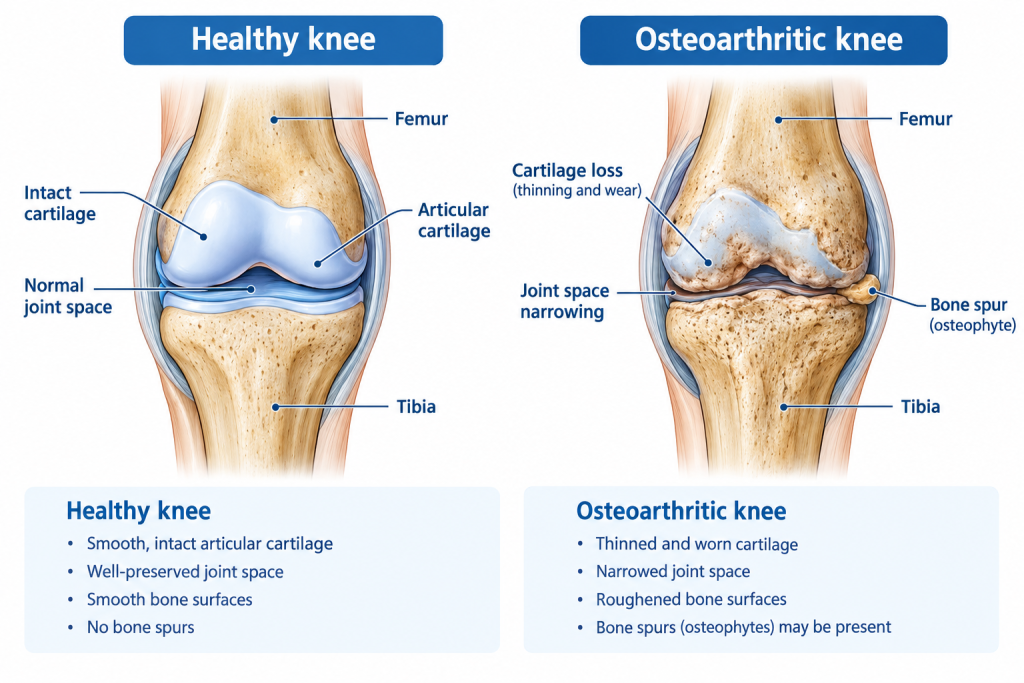
Knee replacement surgery is a procedure in which damaged surfaces of the knee joint are removed and replaced with artificial components. It is commonly considered when advanced arthritis or severe joint damage causes persistent pain and limits daily activities.
The goal is not simply to replace a joint. It is to reduce pain, improve function, restore mobility, and help patients return to meaningful everyday activities.
A joint replacement surgeon in Punawale may recommend surgery after assessing your symptoms, physical examination, X-rays, medical history, activity level, and response to non-surgical treatments.
What Are the Latest Advances in Knee Replacement Surgery in 2026?
Modern knee replacement is no longer based on a single standard approach for every patient. Surgeons now have access to better imaging, digital planning tools, improved implants, refined surgical techniques, and enhanced recovery protocols.
Some of the important developments include:
1. More Personalized Surgical Planning
Every knee is different. Modern planning allows surgeons to study the patient’s anatomy and alignment more carefully before surgery.
Digital imaging and computer-assisted planning can help the surgical team understand:
- Knee alignment
- Bone anatomy
- Joint deformity
- Implant positioning
- Ligament balance
- Overall leg alignment
This allows the surgical plan to be adapted to the individual rather than relying only on a standard template.
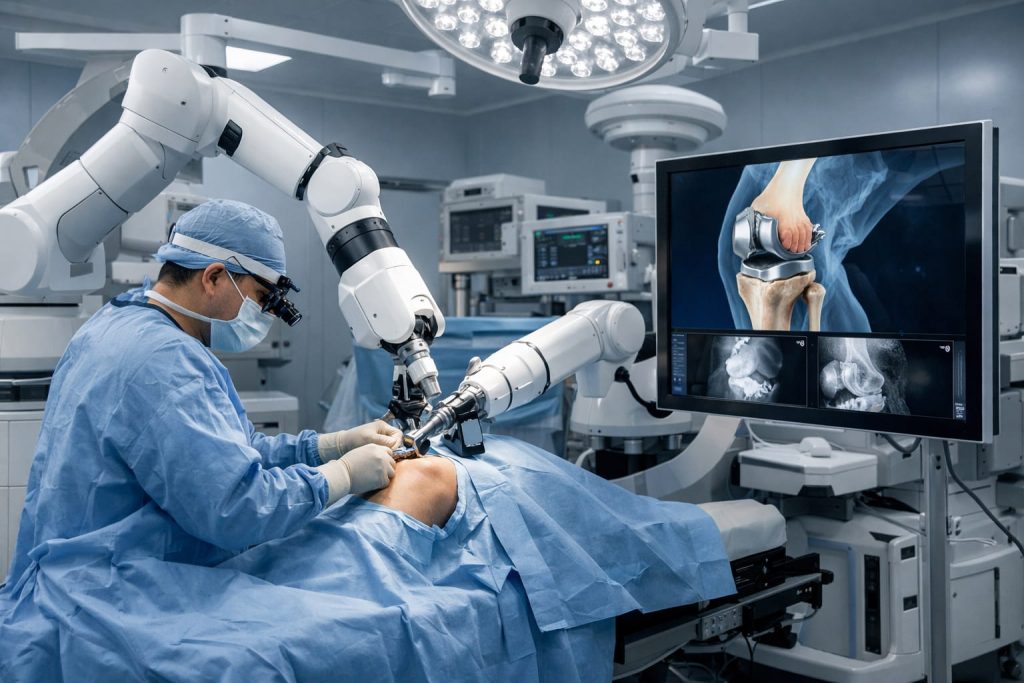
2. Computer-Assisted and Robotic-Assisted Knee Replacement
Robotic and computer-assisted technologies have become increasingly available for knee replacement procedures.
These systems can help surgeons with preoperative planning and intraoperative positioning. They may provide detailed information about bone anatomy and alignment during surgery.
However, patients should understand an important point: robotic assistance is a surgical tool, not a replacement for the surgeon’s expertise.
The surgeon remains responsible for diagnosis, choosing the appropriate procedure, balancing the knee, positioning the implant, and managing unexpected findings during surgery.
If you are considering advanced treatment, ask your best orthopedic surgeon in Punawale whether computer-assisted or robotic-assisted surgery is appropriate for your specific condition.
3. Improved Knee Implant Designs
Modern knee implants are available in different designs, sizes, materials, and fixation options.
Implant selection depends on several factors, including:
- Age
- Bone quality
- Knee anatomy
- Activity level
- Ligament condition
- Degree of joint damage
- Overall health
A suitable implant is not necessarily the most expensive or newest implant. The important question is whether it is appropriate for your anatomy and clinical needs.
4. Better Pain Management
Pain control has also improved significantly.
Modern knee replacement programs may combine several approaches to reduce postoperative discomfort. Depending on the patient’s health and surgical plan, these can include regional anesthesia, local pain-control techniques, appropriate medications, ice therapy, and early movement.
Better pain management can make it easier for patients to begin rehabilitation and participate in physiotherapy after surgery.
5. Enhanced Recovery After Surgery
Enhanced Recovery After Surgery, often called ERAS, focuses on preparing patients before surgery and helping them recover efficiently afterward.
The approach may include:
- Preoperative medical assessment
- Patient education
- Optimized nutrition and medical conditions
- Effective anesthesia and pain control
- Early mobilization
- Structured physiotherapy
- Appropriate discharge planning
The exact recovery pathway varies from patient to patient.
Can Knee Replacement Be Performed Through Smaller Incisions?
Modern knee replacement techniques may use tissue-sparing approaches and carefully planned incisions. The exact surgical approach depends on the patient’s anatomy, deformity, previous surgeries, and the surgeon’s assessment.
It is better to focus on safe and accurate surgery rather than simply choosing a procedure because it is advertised as minimally invasive.
A smaller incision does not automatically mean a better outcome. Proper implant positioning, soft-tissue balance, infection prevention, and rehabilitation remain critical.
Who May Need Knee Replacement?
Knee replacement is generally considered when knee damage becomes severe enough to significantly affect quality of life and conservative treatment no longer provides adequate relief.
Common symptoms include:
- Persistent knee pain
- Difficulty walking
- Pain while climbing stairs
- Stiffness
- Reduced range of motion
- Swelling
- Knee deformity
- Difficulty performing everyday activities
- Pain that interferes with sleep
Osteoarthritis is one of the most common reasons for knee replacement, but other conditions can also damage the knee joint.
Not everyone with knee pain needs surgery.
A consultation with an experienced orthopedic surgeon in Punawale can help determine whether non-surgical treatment, injections, physiotherapy, or joint replacement is more appropriate.
What Is the Recovery Like After Knee Replacement?
Recovery is a process rather than a single event.
Many patients begin moving the operated leg soon after surgery under professional supervision. Physiotherapy then plays an important role in improving strength, flexibility, balance, and walking ability.
Recovery can involve:
Early stage: Pain control, movement, walking assistance, and basic exercises.
Intermediate stage: Increasing walking distance, improving knee movement, strengthening muscles, and becoming more independent.
Later stage: Returning to normal daily activities and gradually increasing appropriate physical activity.
The recovery timeline varies according to age, overall health, muscle strength, surgical factors, rehabilitation, and individual healing.
Knee Replacement: Traditional Surgery vs Modern Approaches
| Factor | Traditional Approach | Modern Approach |
| Surgical planning | Standard planning methods | May include digital/computer-assisted planning |
| Implant selection | Based on established options | More individualized selection |
| Alignment assessment | Conventional methods | May use advanced navigation or robotic assistance |
| Pain management | Standard protocols | Multimodal pain-management strategies |
| Recovery | Structured rehabilitation | Enhanced recovery and early mobilization |
| Patient education | Preoperative guidance | Greater emphasis on preparation and recovery planning |
Modern technology can improve surgical planning and precision, but outcomes still depend heavily on appropriate patient selection and experienced clinical decision-making.
How Should You Choose a Knee Replacement Surgeon?
Choosing the right surgeon is one of the most important decisions you can make.
When researching a best knee replacement surgeon in Punawale, consider:
- Relevant orthopedic qualifications
- Experience in knee and joint replacement
- Hospital and surgical infrastructure
- Approach to diagnosis and treatment
- Availability of appropriate surgical technology
- Rehabilitation support
- Communication and willingness to answer questions
- Transparent discussion of benefits, risks, alternatives, and expected recovery
Do not choose a surgeon based only on advertising claims such as “latest,” “100% success,” or “painless surgery.”
A good consultation should leave you with a clear understanding of why surgery is recommended, what alternatives exist, what the procedure involves, and what recovery may look like.
Questions to Ask Before Knee Replacement Surgery
Before making a decision, consider asking your surgeon:
- Why do I need knee replacement?
- Are there non-surgical options I should try first?
- Which type of knee replacement is suitable for me?
- Will computer-assisted or robotic technology benefit my case?
- What type of implant is being recommended?
- What are the potential risks and complications?
- How long could rehabilitation take?
- When can I walk normally?
- What activities should I avoid during recovery?
- What follow-up care will I need?
These questions can help you make a more informed decision.
Is Knee Replacement Surgery Right for You?
The answer depends on your symptoms, diagnosis, joint damage, general health, and response to other treatments.
If knee pain is limiting your daily life despite appropriate non-surgical treatment, it may be time to discuss surgical options with an orthopedic specialist.
For adults searching for a knee replacement surgeon in Punawale, Dr. Siddhesh Parab provides orthopedic consultation focused on evaluating knee problems and discussing suitable treatment options based on each patient’s condition.
The goal should always be clear: the right treatment for the right patient at the right time.
Key Takeaways
- Knee replacement technology continues to evolve in 2026.
- Digital planning, computer-assisted surgery, improved implants, and enhanced recovery protocols can support modern knee replacement care.
- Robotic assistance is a tool that supports the surgeon; it does not replace surgical expertise.
- Not every patient with knee pain needs surgery.
- Proper diagnosis and patient selection are essential.
- Physiotherapy and rehabilitation are important parts of recovery.
- Patients should discuss benefits, risks, alternatives, implant choices, and expected recovery with their orthopedic surgeon.
- Choosing an experienced joint replacement surgeon in Punawale can help you understand your treatment options more clearly.
If persistent knee pain is affecting your walking, sleep, work, or everyday activities, consider getting an orthopedic evaluation rather than continuing to ignore the symptoms.
FAQs
Is knee replacement surgery safe in 2026?
Knee replacement is a commonly performed orthopedic procedure, but like any major surgery it has potential risks. Your surgeon can explain the benefits and risks based on your health and knee condition.
What is the latest technology used in knee replacement?
Modern knee replacement may involve digital planning, computer-assisted navigation, robotic assistance, improved implant designs, and enhanced recovery protocols.
Is robotic knee replacement better than traditional knee replacement?
Robotic assistance can support planning and surgical precision in appropriate cases, but it does not automatically produce better results for every patient. The surgeon’s expertise and correct patient selection remain important.
How long does it take to recover from knee replacement?
Recovery varies between individuals. Many patients begin walking with assistance soon after surgery, while strength, mobility, and confidence continue improving through rehabilitation.
How do I choose the best knee replacement surgeon in Punawale?
Look at the surgeon’s qualifications, relevant experience, hospital facilities, treatment approach, rehabilitation support, and ability to clearly explain your options and expected outcomes.
Can I avoid knee replacement surgery?
Depending on the severity of joint damage, options such as physiotherapy, weight management, medicines, activity modification, and injections may help some patients. An orthopedic evaluation can determine whether these approaches are suitable.
At what age is knee replacement performed?
There is no single ideal age. The decision is based mainly on symptoms, joint damage, functional limitations, overall health, and whether other treatments have provided sufficient relief.