
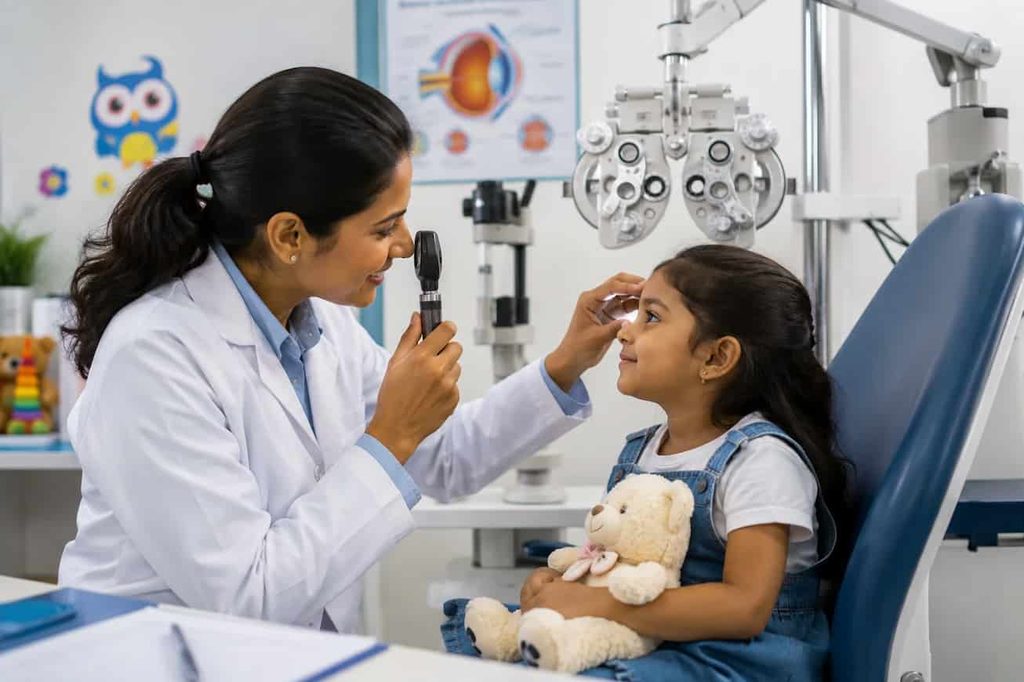
Children rarely complain about their eyesight. A child who has always seen the world a little blurry assumes everyone sees it that way, so they simply squint, sit closer to the television or lose interest in the blackboard. By the time a parent or teacher notices, learning, confidence and even sports performance may already have been affected.
That is why regular eye check-ups matter long before a child can read a letter chart. If you are searching for a Pediatric Ophthalmologist in Shivaji Nagar, this guide explains the common problems doctors look for, the warning signs at home, what happens during a visit and how to choose a clinic where your child feels safe and understood.
🌟 Why Early Eye Care Matters
A large share of classroom learning is visual.
Many conditions respond best when treated in childhood.
Children seldom report blurry or double vision.
Exams can be done even for babies and non-readers.
Why Children Need a Specialist, Not Just an Eye Test
A child’s eyes are not simply smaller versions of an adult’s. The visual system is still developing during the early years, and the brain is learning how to interpret the signals it receives from each eye. If one eye sends a blurred image for too long, the brain may begin to ignore it, and vision in that eye can fail to develop properly even though the eye itself looks healthy.
A paediatric ophthalmologist is a medical doctor trained to examine and treat eye conditions in children, including babies, toddlers and teenagers. They use age-appropriate tests, picture charts and games, and they know how to keep a nervous child relaxed. They can also identify problems that a quick screening at school or an optical shop may miss.
Common Childhood Eye Conditions
Most children who need eye care have one of a handful of well-understood conditions. Knowing the names helps you ask better questions during the consultation.
Short-sightedness, long-sightedness and astigmatism that blur vision and are corrected with glasses.
Reduced vision in one eye because the brain favours the other.
Eyes that do not line up and point in the same direction.
Redness, itching and watering that keep returning.
Tired, dry or aching eyes after long screen use.
Constant watering or sticky discharge in infants.
Understanding Lazy Eye and Squint
Amblyopia and squint are closely linked but are not the same thing. A squint is a problem of eye alignment, which you can often see, whereas amblyopia is a problem of vision development that may be invisible from the outside. A child can have amblyopia without any obvious squint, which is exactly why a proper examination matters.
Treatment depends on the cause. It may include corrective glasses, patching the stronger eye to encourage the weaker one to work harder, eye exercises or, in selected cases, surgery to realign the eyes. The earlier the problem is found, the more flexible the developing visual system is, so prompt assessment gives the best chance of a good outcome.
Warning Signs Parents Should Not Ignore
You know your child better than anyone. If you notice any of the following, book an eye examination rather than waiting for the next school screening.
⚠️ Red-Flag Checklist
- Frequent squinting, eye rubbing or blinking.
- Sitting very close to the television or holding books near the face.
- Tilting or turning the head to look at things.
- Eyes that appear crossed, drifting or misaligned in photographs.
- Recurring headaches, especially after reading or homework.
- Poor handwriting, losing place while reading or sudden drop in school performance.
- Excessive watering, light sensitivity or a white or unusual reflection in the pupil.
Screens, Outdoor Play and Rising Myopia
Online classes, tablets and mobile games have become part of childhood, and eye doctors across India are seeing more children with short-sightedness than before. Researchers link this trend to long hours of close-up work combined with less time outdoors. Screens are not poisonous for the eyes, but prolonged, uninterrupted near focus can cause strain and may contribute to myopia progression in susceptible children.
Outdoor time is linked with healthier eye growth.
Every 20 minutes, look at something 20 feet away for 20 seconds.
Keep books and screens at a comfortable arm’s length.
Leafy greens, carrots, eggs, fruits and plenty of water.
What to Expect at Your Child’s First Visit
Many parents worry that the examination will frighten their child. In reality, a good paediatric eye visit feels more like a series of games. Here is the usual sequence:
- History: The doctor asks about birth, family eye history, symptoms and school or screen habits.
- Vision testing: Picture charts, letters or shape-matching depending on the child’s age.
- Alignment and movement checks: Observing how both eyes work together and follow targets.
- Dilating drops: These relax the focusing muscle so the true spectacle number can be measured accurately.
- Internal eye examination: A check of the retina and optic nerve for overall eye health.
- Advice and plan: Clear explanation of findings, glasses if needed and the follow-up schedule.
Dilating drops can sting briefly and may cause blurry near vision and light sensitivity for a few hours, so carry sunglasses and plan a relaxed rest of the day. Bring any previous glasses, reports and a list of medicines your child takes.
Helping Your Child Accept Glasses
Hearing that a child needs glasses can feel upsetting, but most children adapt faster than parents expect. Let your child choose a comfortable, well-fitting frame in a colour they like, and talk about glasses as a tool that helps them see clearly, not as a flaw. Praise them when they wear them consistently, and share stories of friends or favourite characters who wear them too.
Consistency matters more than style. Glasses prescribed for amblyopia or squint only work when they are worn as advised. If your child keeps removing them, tell the doctor rather than giving up, because small adjustments to fit, lenses or routine often solve the problem.
Children’s Eye Care Services at Raghav Eye Hospital
Raghav Eye Hospital, led by Dr. Sarika Sethia, offers eye-care services that support families from the first check-up through long-term follow-up. Here is an overview of the kinds of services parents commonly look for.
Age-appropriate vision and eye-health testing.
Accurate glasses after proper dilated refraction.
Assessment and guided treatment plans.
Guidance to monitor and slow progression.
Relief for red, itchy and watery eyes.
Scheduled checks to track your child’s progress.
How to Choose the Right Pediatric Eye Hospital in Shivaji Nagar
The best clinic for your child is one where both of you feel comfortable. Consider these points while deciding:
- Qualified doctors: Look for a medically trained ophthalmologist with experience in treating children.
- Child-friendly approach: Patience, gentle communication and a calm environment.
- Complete testing facilities: Proper equipment for refraction, alignment and retinal examination.
- Clear explanations: The doctor should talk to you and your child in simple language.
- Follow-up support: Childhood conditions need regular reviews, so ease of access matters.
- Honest recommendations: Treatment advice should be explained, not rushed.
Visiting the clinic in person, meeting the team and observing how they interact with your child will tell you more than any advertisement. You can find the location below.
📍 Find Pediatric Eye Hospital in Shivaji Nagar on the map below:
Frequently Asked Questions
At what age should my child have the first eye check-up?
How can I tell if my child has a vision problem?
Can a lazy eye or squint be treated?
Are dilating eye drops safe for children?
Does screen time damage my child’s eyes?
How do I book an appointment for my child?
Final Takeaway
Good vision is the foundation of learning, play and confidence, and most childhood eye problems are far easier to manage when they are found early. Regular check-ups, healthy screen habits, outdoor time and attention to warning signs give your child the best start. When you are ready to book, meeting the Best Pediatric Ophthalmologist in Shivaji Nagar for a full examination is a caring first step.
Whether your child needs a routine screening or ongoing treatment, a trusted Pediatric Eye Specialist in Shivaji Nagar can guide you with patience and clarity. Book a visit at Raghav Eye Hospital and help your child see the world clearly.
Disclaimer: This article is for general information only and is not a substitute for professional medical advice. Please consult a qualified eye doctor for your child’s diagnosis and treatment.