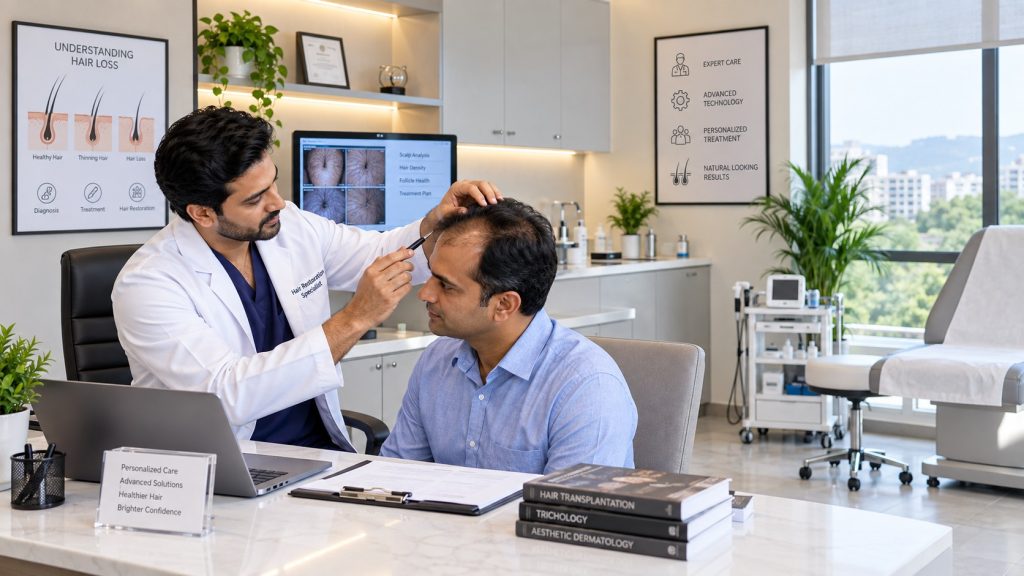

Noticing more hair on your pillow, comb or shower drain can be stressful, and it is natural to feel worried when your hairline seems to be moving back or your parting looks wider than before. Hair loss is rarely random. Hormones, nutrition, stress, scalp health and genetics all play a part, and the cause is different for every person. That is why choosing the right Hair Treatment In Baner begins with a proper diagnosis by a dermatologist, who can tell whether your hair fall is temporary, genetic or linked to an underlying health issue. A correct diagnosis saves months of trial and error with shampoos, oils and supplements that do not work. In this guide, we explain the common causes of hair fall, the different types of hair loss, how doctors diagnose the problem, the treatments used today and how to choose a clinic you can trust. Whether you are in your twenties and noticing a receding hairline, or a new mother dealing with postpartum shedding, this guide will help you take the right first step.
Why Does Hair Fall Out?
Most people lose 50 to 100 hairs a day, which is part of the natural growth cycle. Hair fall becomes a concern when it is heavy, lasts more than a few months, or leaves visible thin patches. The most common causes include:
- Genetics: inherited sensitivity to hormones shrinks hair follicles over time, causing gradual thinning at the crown or a receding hairline.
- Nutritional gaps: low iron, vitamin D, vitamin B12 or protein intake weakens hair at the root.
- Stress and illness: high fever, surgery, crash dieting or long periods of emotional stress can push many hairs into the shedding phase at once.
- Thyroid and hormonal changes: including PCOS, pregnancy and the months after delivery.
- Scalp problems: dandruff, fungal infection or inflammation can damage follicles if left untreated.
- Hair habits: tight hairstyles, frequent heat styling, harsh colouring and chemical straightening.
- Medicines: some medicines list hair shedding as a side effect, so tell your doctor everything you take.
Common Types of Hair Loss
Not all hair loss looks the same, and the treatment depends on the type:
- Pattern hair loss: the most common type. Men usually notice a receding hairline and thinning crown, while women notice a wider parting and reduced volume.
- Telogen effluvium: sudden, widespread shedding a few months after a trigger such as illness, stress or childbirth. It often settles once the cause is corrected.
- Alopecia areata: round, smooth bald patches caused by the immune system attacking follicles.
- Traction hair loss: thinning along the hairline from constant pulling by tight hairstyles.
When Should You See a Dermatologist?
Book a consultation if you notice sudden or patchy hair loss, a scalp that itches, burns or flakes, hair that keeps thinning despite home care, or a family history of baldness. Early treatment matters because follicles that are still active respond far better than follicles that have been dormant for years. Waiting too long can make the same problem harder and more expensive to fix.
How Is the Cause Diagnosed?
A good consultation begins with questions about your diet, stress levels, medicines, family history and hair care routine. The doctor then examines your scalp, often with a magnified scalp scan called trichoscopy, to check follicle size, density and scalp condition. Where needed, blood tests for iron, vitamin D, vitamin B12 and thyroid function are advised. This step turns guesswork into a clear plan and prevents you from treating the wrong problem.
Hair Treatment Options Used Today
There is no single treatment that suits everyone. Depending on your diagnosis, your doctor may combine two or more of these:
- Medical therapy: prescription topical and oral medicines that slow hair fall and support regrowth. These work best when used regularly and under medical supervision.
- PRP (platelet-rich plasma): a procedure that uses growth factors from your own blood, injected into the scalp to stimulate weak follicles.
- Mesotherapy: micro-injections of vitamins, minerals and amino acids directly into the scalp to nourish the roots.
- Low-level laser therapy: a non-invasive option that supports follicle activity and can be added to other treatments.
- Scalp treatments: medicated shampoos and therapies that control dandruff, oil and inflammation.
- Nutritional correction: supplements and diet changes based on your test results, not on guesswork.
Results take time because hair grows only about a centimetre a month. Most patients need three to six months of consistent treatment before the improvement is clearly visible, and regular follow-up visits help the doctor adjust the plan as your hair responds.
Is a Hair Transplant the Right Choice?
When hair loss is advanced and the follicles in the affected area no longer respond to medicines or PRP, a surgical option may be discussed. If you are researching Hair Transplant In Baner, ask about donor hair availability, the technique used, the density you can realistically expect and what recovery looks like. A good candidate is someone whose hair loss has stabilised and who has enough healthy donor hair at the back and sides of the scalp. A transplant moves your own hair, so it does not stop future loss on its own. Many patients continue medical treatment afterwards to protect the existing hair.
Find Us in Baner
Visit Viva Luxe by Dr Sonnal Chavaan for a scalp assessment and a treatment plan made for you.
Everyday Habits That Support Healthy Hair
- Eat enough protein, leafy greens, nuts, seeds, eggs, pulses and iron-rich foods.
- Wash your hair with a mild shampoo that suits your scalp type, two to three times a week, and keep the scalp clean.
- Avoid tight ponytails, frequent heat styling and harsh colouring or straightening.
- Comb gently, and avoid brushing hard when your hair is wet and fragile.
- Sleep seven to eight hours and manage stress through exercise, walking or meditation.
- Do not self-medicate. A product that worked for a friend may not suit your hair type or the cause of your hair loss.
Common Hair Loss Myths
- Myth: Frequent shampooing causes baldness. Fact: Washing removes dirt and oil and does not cause hair loss. The hairs that fall were already shed.
- Myth: Hair loss comes only from the mother’s side. Fact: Genes from both parents matter.
- Myth: Wearing caps or helmets makes hair fall. Fact: This is not true unless the cap is very tight or dirty and causes scalp infection.
- Myth: Oils alone can regrow hair. Fact: Oils can condition hair, but they cannot treat hormonal or nutritional causes.
How to Choose the Right Clinic
Look for a qualified dermatologist who examines your scalp before recommending anything, explains the cause of your hair loss in plain language, is honest about realistic results, and schedules follow-ups to track your progress. Be careful with clinics that promise guaranteed or overnight regrowth, push expensive packages on the first visit, or skip a proper diagnosis.
Final Takeaway
Hair loss is common and, in most cases, treatable when it is diagnosed early. Find the cause first, follow the treatment plan consistently, look after your scalp and nutrition, and give your hair enough time to respond. Healthy regrowth is a slow process, but the right guidance makes it far more predictable.
If you want expert guidance close to home, visit a trusted Skin And Hair Clinic In Baner and get a personalised plan after a proper scalp evaluation.
Frequently Asked Questions
How many hairs is it normal to lose in a day?
Losing 50 to 100 hairs a day is normal. If you notice much more than that for several weeks, or visible thinning, it is worth getting checked.
Can hair loss be reversed?
Many types of hair loss, especially those linked to nutrition, stress or scalp problems, can improve with the right treatment. Genetic hair loss can usually be slowed and partly regrown if treated early.
How long does it take to see results from hair treatment?
Most people see less shedding in about 6 to 8 weeks and visible improvement after 3 to 6 months of regular treatment.
Is PRP treatment painful?
Most patients feel mild discomfort. A numbing cream is usually applied beforehand, and you can return to normal activities the same day.
Who is a good candidate for a hair transplant?
Adults whose hair loss has stabilised and who have enough healthy donor hair are usually good candidates. A dermatologist will examine your scalp and tell you if it is the right option.
Should I take hair supplements without consulting a doctor?
It is better not to. Supplements help only when you have a deficiency, and a blood test shows which nutrients you actually need.
Ready to Stop Hair Fall?
Book a scalp consultation with Dr Sonnal Chavaan at Viva Luxe, Baner.
Book Your Consultation