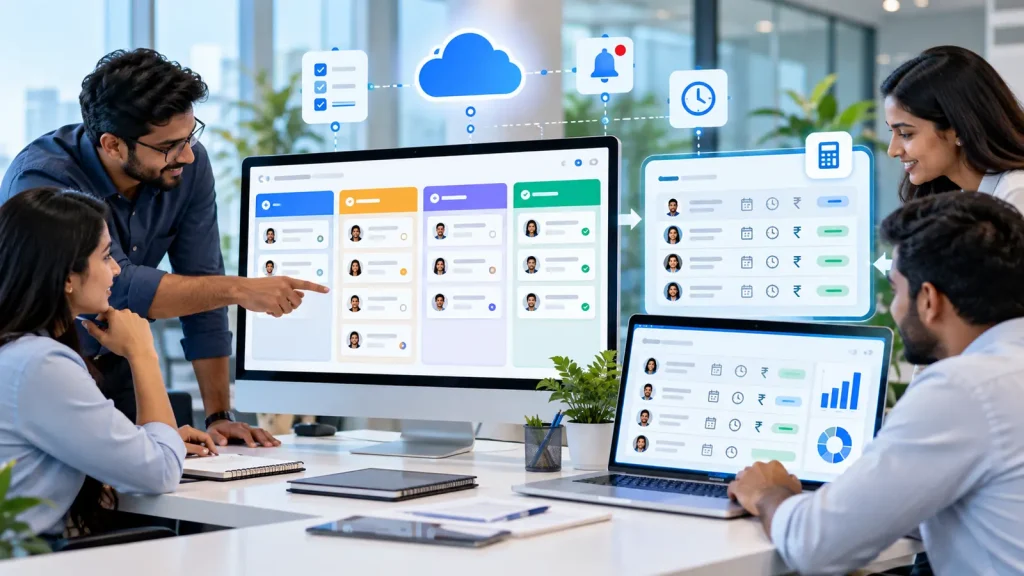
Managing daily work becomes increasingly difficult when employees handle multiple projects, deadlines, clients, and responsibilities at the same time. Tasks can easily get lost in emails, spreadsheets, chat messages, or informal conversations. A structured workflow gives businesses a better way to organize responsibilities, monitor progress, and make sure important work reaches completion.
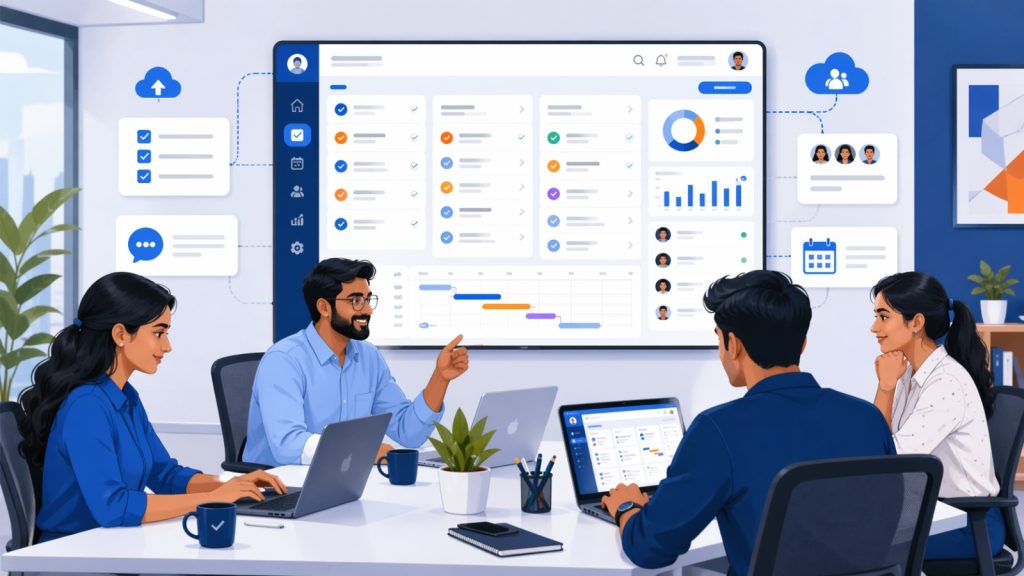
A Cloud-Based Task Management System brings these activities into one centralized environment. Managers can create and assign tasks, set deadlines, monitor progress, and understand what is pending or completed. Employees can see their responsibilities clearly and update task status as work progresses. This creates better visibility across the organization without depending on constant manual follow-ups.
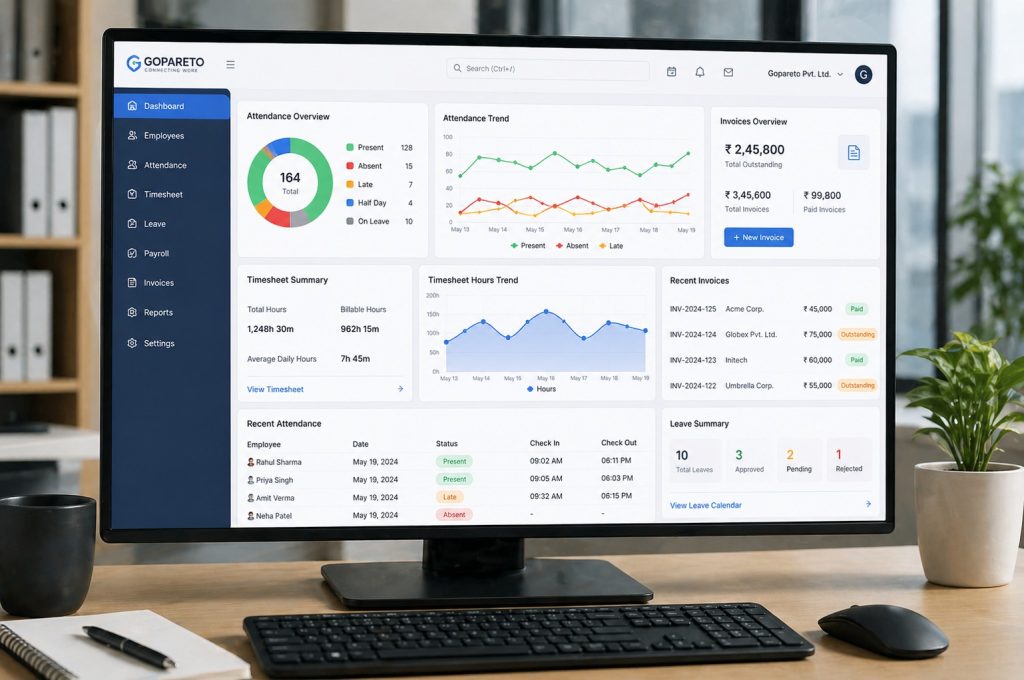
For businesses looking to connect employee activities, task tracking, timesheets, payroll, and other operations, GoPareto provides a centralized business management approach designed to improve workflow visibility and productivity.
What Is a Cloud-Based Task Management System?
A Cloud-Based Task Management System is an online software solution that helps businesses create, assign, organize, monitor, and complete tasks. Because the information is stored and managed through the cloud, authorized users can access their work information from different locations and devices.
Instead of maintaining separate spreadsheets for different teams, businesses can organize assignments within a centralized platform. A typical workflow can move through stages such as task creation, assignment, execution, progress tracking, review, and completion.
This structure makes it easier for managers to understand who is responsible for a particular task, what the deadline is, and whether the work is progressing as expected.
How a Cloud-Based Task Management System Organizes Workflows
A well-organized workflow does more than create a list of tasks. It establishes a clear path for work to move from an initial requirement to a completed outcome.
1. Task Creation Gives Work a Clear Starting Point
Every workflow begins with identifying what needs to be done. A manager can create a task and provide relevant information such as the task description, deadline, priority, and expected outcome.
For example, a marketing agency may create separate tasks for keyword research, content writing, design, client approval, and publishing. Instead of keeping these instructions across different messages, the work can be organized within a structured task workflow.
2. Assigning Ownership Creates Accountability
Once a task is created, it needs an owner. Assigning work to a specific employee or team makes responsibilities clearer.
Without defined ownership, employees may assume someone else is handling a particular activity. This can result in delays, duplicated work, or missed responsibilities.
A Cloud-Based Task Management System gives managers a centralized way to assign responsibilities and helps employees understand exactly which activities belong to them.
Monitoring Progress From Assignment to Completion
Task assignment is only the beginning. Managers also need visibility into what happens after a task is assigned.
A centralized system can provide status information such as pending, in progress, under review, or completed. This allows managers to identify delayed activities and potential bottlenecks earlier.
Instead of sending repeated messages such as “Is this task completed?” managers can review available task information and focus their attention on work that actually needs intervention.
Real-time task visibility is particularly useful for businesses managing multiple departments or distributed teams. Workflow management tools can help teams maintain visibility into assignments, deadlines, dependencies, and progress.
How Cloud-Based Task Management Supports Team Collaboration
Modern businesses often involve multiple people in completing a single project. One employee may create the initial work, another may review it, and a third person may complete the final step.
A structured workflow helps connect these activities.
Each stage provides context for the next person involved in the process.
When task-related information remains centralized, employees can spend less time searching through different communication channels for instructions or updates. This can make collaboration more organized and help teams understand where a project currently stands.
Cloud-Based Task Management System for Remote and Hybrid Teams
Remote and hybrid work environments can make traditional task tracking more challenging. Employees may work from different locations, while managers still need to coordinate deadlines and monitor progress.
A Cloud-Based Task Management System allows authorized users to access task information online rather than depending on files stored on a particular computer.
This can be useful for businesses with:
Cloud accessibility can help maintain a consistent workflow even when employees are not working from the same physical location.
Connecting Task Management With Employee Timesheets
Task management and employee timesheets serve different purposes, but they can complement each other.
When these processes work together, businesses can gain a broader understanding of employee activities. Managers can compare assigned responsibilities with recorded work time and identify areas where additional planning or resource allocation may be required.
For businesses already using employee timesheet management software, connecting task visibility with workforce information can create a more organized approach to monitoring daily work.
Payroll Calculation Software and Task-Based Workforce Management
Payroll Calculation Software focuses on calculating employee payroll based on relevant workforce and compensation information. While payroll and task management have different purposes, both contribute to effective workforce administration.
For example, task management can help managers understand employee assignments and workload, while timesheet data can provide information about recorded working hours. Payroll processes can then use appropriate employee and attendance-related information according to the organization’s payroll setup.
GoPareto brings business management functions such as employee activities, timesheets, payroll, tasks, and invoicing into a broader digital business-management environment. This can reduce the need to manage every operational activity through disconnected tools.
Benefits of Organizing Workflows Digitally
Moving from manual task tracking to a structured digital workflow can provide several practical benefits.
Managers can get a clearer picture of pending, ongoing, and completed work. This makes it easier to identify where attention is required.
Every assignment can have a defined owner. Employees know what they are expected to complete, while managers can monitor responsibility more systematically.
Deadlines and priority information make important assignments more visible and can help teams plan their work more effectively.
Instead of repeatedly asking employees for status updates, managers can use task information to monitor progress.
When task information is centralized, employees can work with greater clarity about responsibilities, progress, and next steps.
Reports and task information can help businesses identify recurring delays, workload issues, and areas where workflows may need improvement.
Workflow management systems are generally designed to improve coordination, visibility, resource utilization, and process consistency by giving teams a structured way to move work through different stages.
How GoPareto Can Help Organize Business Workflows
GoPareto is designed to help businesses manage different aspects of day-to-day operations through a centralized business management platform.
Its employee task management capabilities can support task assignment, deadline management, progress monitoring, accountability, and productivity visibility. These capabilities can be particularly useful for organizations that want to reduce dependency on spreadsheets, scattered messages, and repetitive manual follow-ups.
Businesses can also connect task management with related workforce processes such as employee timesheets and payroll. This creates a more connected operational workflow rather than treating every business process as a separate activity.
Best Practices for Implementing a Cloud-Based Task Management System
Simply adopting software does not automatically create an efficient workflow. Businesses should establish clear processes for using it.
Start by defining how tasks enter the system. Every assignment should have a clear description, owner, priority, and deadline where applicable.
Next, establish consistent task statuses. Employees should know when to mark a task as pending, in progress, under review, or completed.
Managers should also review workload regularly. If one employee has too many urgent assignments while another has available capacity, tasks may need to be redistributed.
Finally, use reports and workflow information to identify recurring bottlenecks. The objective should not be to track employees unnecessarily but to understand whether business processes are working efficiently.
Why Workflow Organization Matters for Growing Businesses
As a business grows, informal methods of managing work become harder to maintain. More employees mean more responsibilities, more projects, more deadlines, and more dependencies.
A structured Cloud-Based Task Management System gives businesses a centralized framework for managing this increasing complexity.
Instead of asking employees to remember every assignment or managers to manually collect every update, the workflow becomes visible within a shared digital environment.
This can help businesses create more predictable processes while giving employees greater clarity about what needs to be done next.
Frequently Asked Questions
1. What is a Cloud-Based Task Management System?
A Cloud-Based Task Management System is an online platform used to create, assign, prioritize, track, and complete tasks. It provides centralized visibility into employee responsibilities, deadlines, and progress.
2. How does a Cloud-Based Task Management System improve workflows?
A Cloud-Based Task Management System organizes work into structured stages, assigns clear ownership, tracks deadlines, and provides visibility into task progress. This can reduce confusion and improve workflow coordination.
3. Can a Cloud-Based Task Management System support remote employees?
Yes. Cloud-based platforms allow authorized users to access task information online, making them suitable for remote, hybrid, and distributed teams.
4. Can task management be connected with employee timesheets?
Yes. Task management and timesheet tracking can complement each other. Tasks show what work is assigned, while timesheets can provide information about recorded working time.
5. What role does Payroll Calculation Software play in workforce management?
Payroll Calculation Software helps businesses manage payroll calculations using relevant employee and payroll information. When combined with task and timesheet management, it can contribute to a more connected workforce-management process.
6. Is a Cloud-Based Task Management System useful for small businesses?
Yes. Small businesses can use a Cloud-Based Task Management System to organize responsibilities, deadlines, projects, and employee activities without relying heavily on spreadsheets or manual follow-ups.
7. How can GoPareto help with task and workforce management?
GoPareto provides business-management capabilities that can help organizations manage tasks, employee activities, timesheets, payroll, and other operational processes from a centralized environment.
Conclusion:
A Cloud-Based Task Management System can turn scattered assignments into a structured workflow. From creating a task and assigning ownership to monitoring progress and confirming completion, every stage becomes easier to organize and track.
For growing businesses, combining task management with employee timesheets and Payroll Calculation Software can provide a more connected approach to workforce and business operations.
With GoPareto, businesses can explore a centralized way to organize employee tasks, monitor work progress, manage timesheets, and support payroll and other business processes.
Visit Gopareto today to explore a more organized approach to managing your business workflows.