Bone and joint pain rarely arrives at a convenient time. A twisted ankle on a morning walk, a stiff knee that makes stairs a daily struggle, or a nagging lower back after long hours at a desk can slowly take over your routine. In a busy city like Pune, where work, traffic and long commutes are part of everyday life, musculoskeletal problems have become one of the most common reasons people visit a hospital. The good news is that modern orthopedic care is more precise, less invasive and far more recovery-focused than it was even a decade ago.
If you live or work around the city centre, finding a trusted Orthopedic Doctor in Shivaji Nagar can save you precious time, reduce travel stress and help you start treatment early. Early diagnosis is the single biggest factor that separates a quick recovery from a long, painful one. This guide explains the common bone and joint problems, the warning signs you should never ignore, the services available at Oyster & Pearl Hospital and how to pick the right specialist for your needs.
Quick Highlights at a Glance
- ✔ Early diagnosis shortens recovery time and lowers treatment cost.
- ✔ Most joint and spine problems can be managed without major surgery when caught on time.
- ✔ Physiotherapy and rehabilitation are as important as the treatment itself.
- ✔ Fractures, severe injuries and sudden joint locking need immediate emergency care.
- ✔ A local specialist makes follow-up visits easier and more consistent.
Why Orthopedic Health Matters More Than Ever
Our bones, joints, muscles, ligaments and tendons work together every second of the day. When one part is injured or worn out, the entire movement chain is affected. A painful knee changes how you walk, which then stresses the hip and lower back. Ignoring a small problem often creates a bigger one somewhere else.
Lifestyle trends are also changing the kind of cases doctors see. Long hours of sitting, low physical activity, poor posture while using phones and laptops, weekend sports without proper warm-up and low vitamin D levels are all contributing to earlier joint and spine complaints, even in people in their twenties and thirties. At the same time, an ageing population is seeing more arthritis, osteoporosis and fall-related fractures. A well-equipped orthopedic department is therefore no longer a luxury; it is a basic healthcare need for every family.
Common Bone and Joint Problems People Face
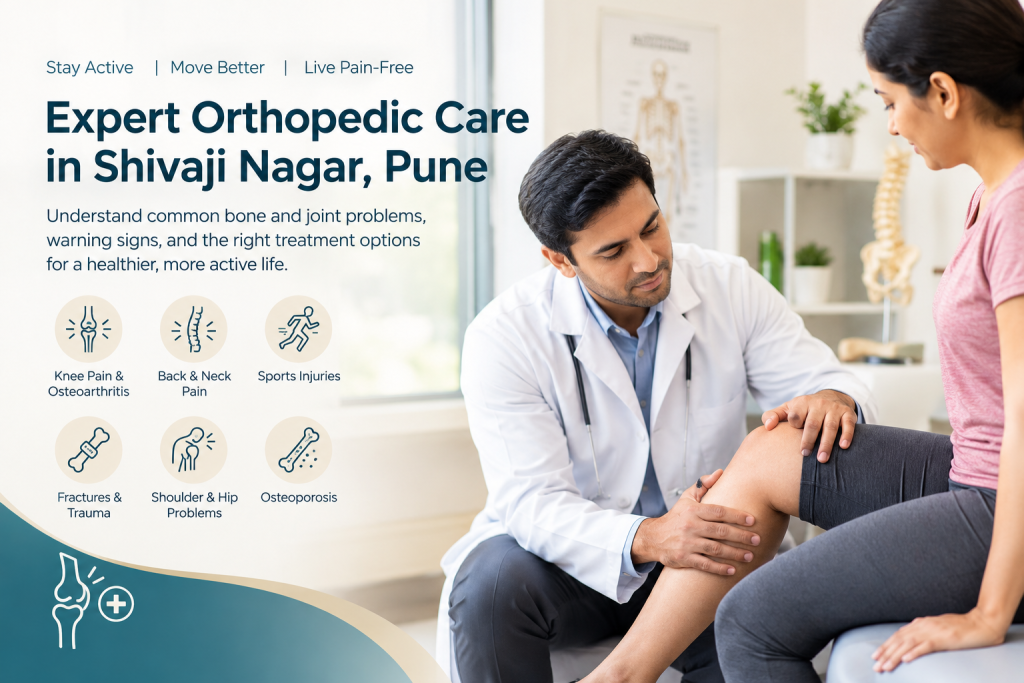
Orthopedic specialists treat a wide range of conditions. Some of the most common ones include:
- Knee pain and osteoarthritis: Gradual wearing of cartilage causes stiffness, swelling and pain while climbing stairs or sitting cross-legged.
- Back and neck pain: Often linked to disc problems, muscle strain, poor posture or long hours at a workstation.
- Sports and ligament injuries: ACL tears, meniscus damage, rotator cuff injuries and tennis or golfer’s elbow are frequent among active people.
- Fractures and trauma: Road accidents, falls at home and workplace injuries need quick stabilisation and proper bone alignment.
- Shoulder and hip problems: Frozen shoulder, bursitis and hip arthritis can severely limit daily movement.
- Osteoporosis: Weak, brittle bones that increase fracture risk, especially in women after menopause and in older adults.
Warning Signs You Should Never Ignore
- Pain that lasts more than two weeks or keeps returning.
- Swelling, redness or warmth around a joint.
- Difficulty bearing weight or a joint that gives way suddenly.
- Numbness, tingling or weakness in the arms or legs.
- Visible deformity after a fall or accident.
Orthopedic Services Offered by Oyster & Pearl Hospital
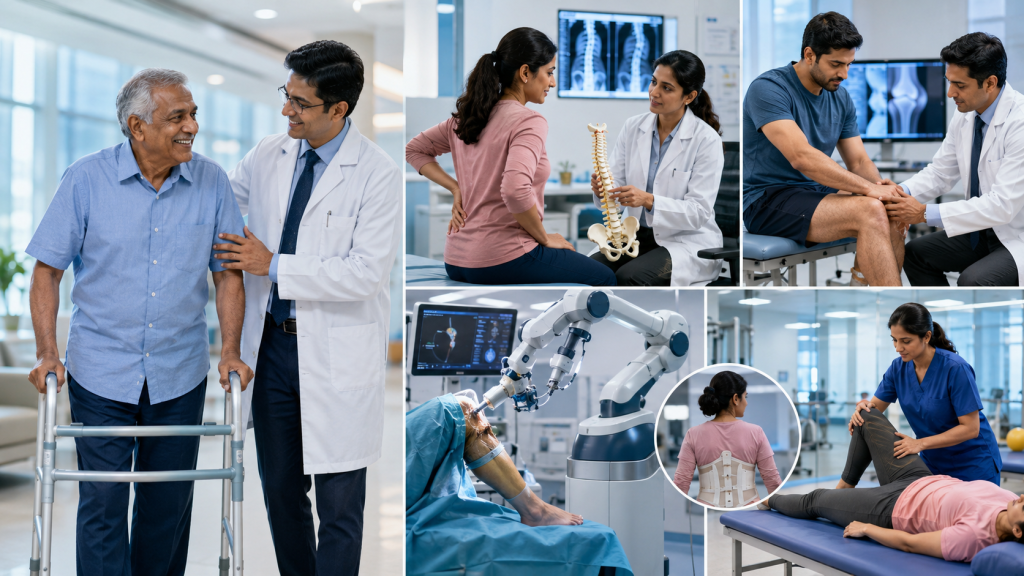
Oyster & Pearl Hospital offers a patient-focused approach to bone, joint and spine care, bringing diagnosis, treatment and rehabilitation under one roof. Here are the main service types patients can look for:
🦴 Joint Replacement
Knee and hip replacement for advanced arthritis, aimed at relieving pain and restoring smooth movement.
🏃 Sports Injury Care
Evaluation and treatment of ligament, tendon and cartilage injuries, including arthroscopic (keyhole) procedures.
🩹 Fracture & Trauma Care
Prompt assessment, stabilisation and surgical or non-surgical management of fractures and accident injuries.
🦺 Spine Care
Diagnosis and treatment plans for back pain, neck pain, disc problems and nerve compression.
💪 Physiotherapy & Rehabilitation
Guided exercise, mobility and strengthening programmes that support recovery before and after treatment.
🔬 Diagnostics & Imaging
X-ray, MRI and other investigations that help the doctor reach an accurate diagnosis quickly.
👶 Child & Senior Bone Care
Attention to growth-related bone issues in children and osteoporosis or fall-related concerns in older adults.
🚑 Emergency Support
Round-the-clock emergency response for serious injuries, accidents and sudden severe pain.
How to Choose the Right Orthopedic Doctor in Shivaji Nagar
Choosing a specialist is a decision that affects your mobility for years, so it deserves a little research. Keep these points in mind:
- Qualifications and experience: Look for a doctor with proven experience in the exact problem you have, whether it is a knee, spine, shoulder or fracture case.
- Complete facilities: A hospital with in-house imaging, operation theatres, physiotherapy and emergency services avoids delays and repeated hospital visits.
- Clear communication: A good doctor explains the diagnosis, the options, the risks and the expected recovery in simple language.
- Conservative-first approach: The best specialists recommend surgery only when medicines, exercises and other non-surgical options are not enough.
- Location and accessibility: Easy access matters because orthopedic treatment usually involves follow-up visits and physiotherapy sessions.
- Patient feedback: Genuine reviews and word of mouth from neighbours, friends and family give a realistic picture of care quality.
Faster access can make a real difference during an injury. If you ever need urgent help, searching for an Emergency Hospital Near Me – Shivaji Nagar and knowing the route in advance will save valuable minutes. Use the map below to find the orthopedic department and plan your visit.
Trending Approaches in Modern Orthopedic Care
Orthopedic treatment today focuses on doing more with less trauma to the body. Minimally invasive and keyhole techniques mean smaller cuts, less blood loss, reduced pain and a faster return to normal life. Better implant materials and improved surgical planning have made joint replacements more durable and natural-feeling. Digital imaging gives surgeons a clearer view of the problem before they begin.
Equally important is the shift towards early mobilisation and structured rehabilitation. Patients are now encouraged to start gentle movement soon after treatment, which prevents stiffness, improves circulation and builds confidence. Preventive care is also gaining ground, with screening for bone density, posture correction advice and ergonomic guidance for desk workers becoming a regular part of consultations.
Simple Daily Habits for Stronger Bones and Joints
- 🌟 Take short movement breaks every 45 to 60 minutes if you sit for long hours.
- 🌾 Include calcium-rich foods and get safe, regular morning sunlight for vitamin D.
- 🏃 Warm up before sports and strengthen your core and leg muscles.
- ⚖ Maintain a healthy weight to reduce stress on knees and hips.
- 👟 Wear supportive footwear and avoid slippery surfaces to prevent falls.
What to Expect During Your First Orthopedic Visit
A first consultation usually begins with a detailed conversation about your symptoms, when the pain started, what makes it better or worse and how it affects your daily activities. The doctor will then carry out a physical examination to check movement, strength, stability and tenderness. Depending on what is found, imaging tests such as an X-ray or MRI may be advised to confirm the diagnosis.
After the diagnosis, the doctor will explain a treatment plan in clear steps. This may include medication, lifestyle changes, physiotherapy, injections or, where truly necessary, a surgical procedure. Carry your previous reports, prescriptions and a list of medicines you take so the specialist gets the full picture. Do not hesitate to ask questions about recovery time, costs and follow-up visits.
Final Takeaway
Healthy bones and joints are the foundation of an active, independent life. Do not wait for pain to become unbearable before seeking help; early consultation, the right diagnosis and a committed rehabilitation plan can prevent small problems from turning into long-term disability. Choose a specialist who listens, explains and offers complete care under one roof.
Keep the details of a dependable Emergency Hospital Near Me – Shivaji Nagar saved on your phone, because the right help at the right time protects your recovery.
Frequently Asked Questions (FAQs)
Disclaimer: This article is for general awareness only and is not a substitute for professional medical advice. Please consult a qualified orthopedic specialist for diagnosis and treatment.