You twist wrong getting out of the car, or maybe you don’t even remember what set it off, and by evening your knee’s puffed up like a balloon. Sound familiar? Most of us have been there at least once. The tricky part isn’t the swelling itself, it’s figuring out whether this settles down with rest and ice, or whether your body’s waving a flag that something more serious is going on underneath.
Knee pain with swelling is one of those symptoms people love to self-diagnose. A quick search, a home remedy, maybe a knee brace picked up from the pharmacy, and you hope for the best. Sometimes that works out fine. Other times it just delays treatment for something that’s quietly getting worse while you wait it out. Knowing where that line sits can save you months of unnecessary discomfort.
Why Knees Swell in the First Place
Swelling is basically your body’s response to injury or irritation inside the joint. When something’s wrong a torn ligament, cartilage that’s worn down, an infection, or inflammation from arthritis fluid builds up around the knee as part of the healing process, or sometimes as a sign of ongoing damage. The knee joint is fairly exposed and takes a lot of daily stress, which is exactly why it ends up swollen so often, whether from a sudden injury or something that’s been building slowly for years.
Common culprits include ligament sprains or tears (think ACL or MCL injuries from sports or an awkward fall), meniscus tears from twisting the knee under load, osteoarthritis where cartilage gradually wears away, gout or other inflammatory conditions, and occasionally infections that need urgent attention. Each of these behaves a bit differently, which is exactly why guessing at home isn’t always reliable.
Signs That Point Toward Something More Than “Just Rest It”
A little swelling after an unusually active day is normal and usually settles within a day or two. But certain signs suggest it’s time to stop self-treating and actually see someone. If the swelling is significant and doesn’t ease up after a few days of rest, ice, and elevation, that’s worth paying attention to. If you can’t bear weight on the leg, or the knee feels unstable like it might buckle or give way that’s a stronger signal something structural has been damaged.
Persistent warmth around the joint, visible redness, or fever alongside the swelling can point toward infection, which needs medical attention right away rather than home care. Pain that wakes you up at night, or swelling that keeps coming back even after periods of rest, often suggests something like arthritis or a chronic ligament issue rather than a one-off injury. In any of these situations, consulting a Knee Surgeon in Pune Maharashtra India is honestly the more reliable path forward, rather than waiting around to see if things improve on their own.
What Happens During a Proper Knee Evaluation
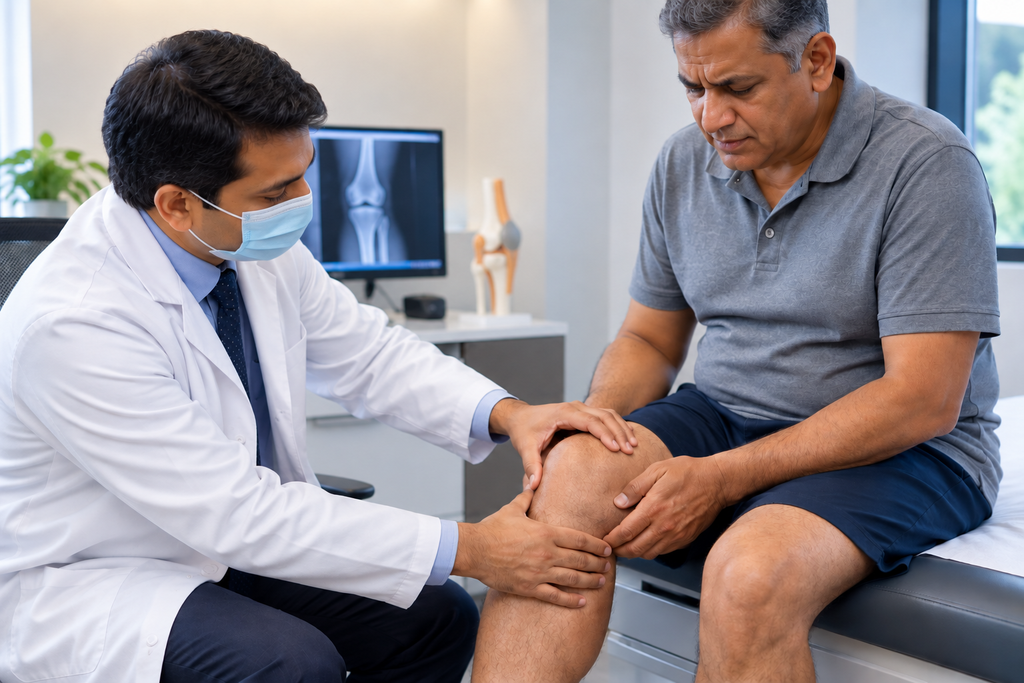
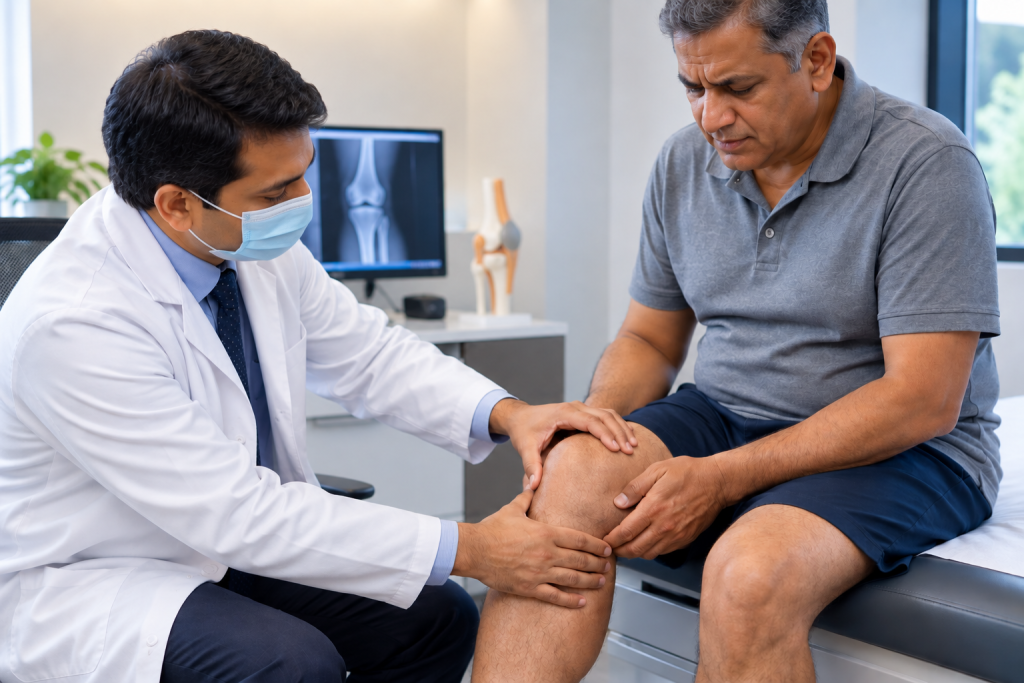
A thorough evaluation starts with understanding the story behind the pain when it started, whether there was a specific injury, what makes it better or worse, and how it’s actually affecting daily movement.
Orthopedic Doctor in Pune Maharashtra India uses this combination of history, exam, and imaging to arrive at a diagnosis that actually explains the swelling, instead of just treating the symptom in isolation.
Dr. Aashish Arbat’s Approach to Knee Pain and Swelling
He is known for his thoroughness in getting to the root of the problem and not rushing to any recommendations. Dr Aashish Arbat has a good reputation among patients who have a chronic or recurring knee problem. He does not look at every case of knee swelling the same way but takes the time to find out if it is related to a mechanical problem such as a ligament or meniscus tear, a degenerative problem like osteoarthritis or an inflammatory process which needs a totally different treatment approach.
Patients often report that his consultations are unhurried; he takes the time to explain what the imaging actually shows, what this means for their particular situation and what realistic treatment options are, be that physiotherapy, medication or in more advanced cases surgical intervention. As a trusted Knee Surgeon in Pune Maharashtra India, his approach centers on getting the diagnosis right first, since that’s really what shapes everything that follows in treatment.
Treatment Options: It’s Not Always Surgery
A lot of people assume that seeing a knee specialist automatically means surgery is coming, but that’s rarely the case. Many instances of knee swelling respond well to conservative treatment rest, targeted physiotherapy, anti-inflammatory medication, and activity modification. Ligament sprains and minor cartilage wear and early arthritis often do very well with this treatment alone, especially if caught early.
If conservative treatment has not been successful, if there is a large structural tear that will not heal on its own, or if the damage to the joint is so great that non-surgical treatment is no longer providing meaningful relief, surgery is used.
Why Timing Matters More Than People Realize
A ligament tear left untreated can lead to ongoing instability, which in turn causes additional wear on the cartilage over time. Early-stage arthritis, if managed proactively, can often be slowed down considerably but once cartilage loss becomes advanced, the treatment options start narrowing fast.
This is really the core reason experts recommend getting persistent or unusual knee swelling checked sooner rather than later. A consultation with an Orthopedic Doctor in Pune Maharashtra India early on tends to preserve a lot more treatment options than waiting does.
Frequently Asked Questions
1. Is knee swelling always a sign of a serious problem?
Not necessarily. Some swelling after exercise is normal and typically gets better with rest. If the swelling is persistent, severe or recurrent, it should be checked by a knee surgeon in Pune, Maharashtra, India to rule out any underlying problems.
2. When to visit a doctor for knee swelling?
If the swelling doesn’t go down after a few days of rest and ice, or if you can’t put any weight on it, see Dr. Aashish Arbat instead of waiting it out.
3. Is surgery the first treatment for knee swelling?
“None. Most cases are initially treated with rest, physiotherapy and medication. Surgery is generally only considered if the problem does not respond to conservative treatment.
4. What makes patients seek out Dr. Aashish Arbat for knee problems?
Dr. Aashish Arbat is known for his thorough diagnostic approach. He takes the time to find out the exact reason for knee pain and swelling before offering a course of treatment, rather than prescribing a one-size-fits-all solution to every case.
5. Can recurrent knee swelling be prevented?
In many cases yes. Especially if the underlying cause, whether joint instability, muscle weakness, or early arthritis is detected and treated early with the right treatment and physiotherapy.